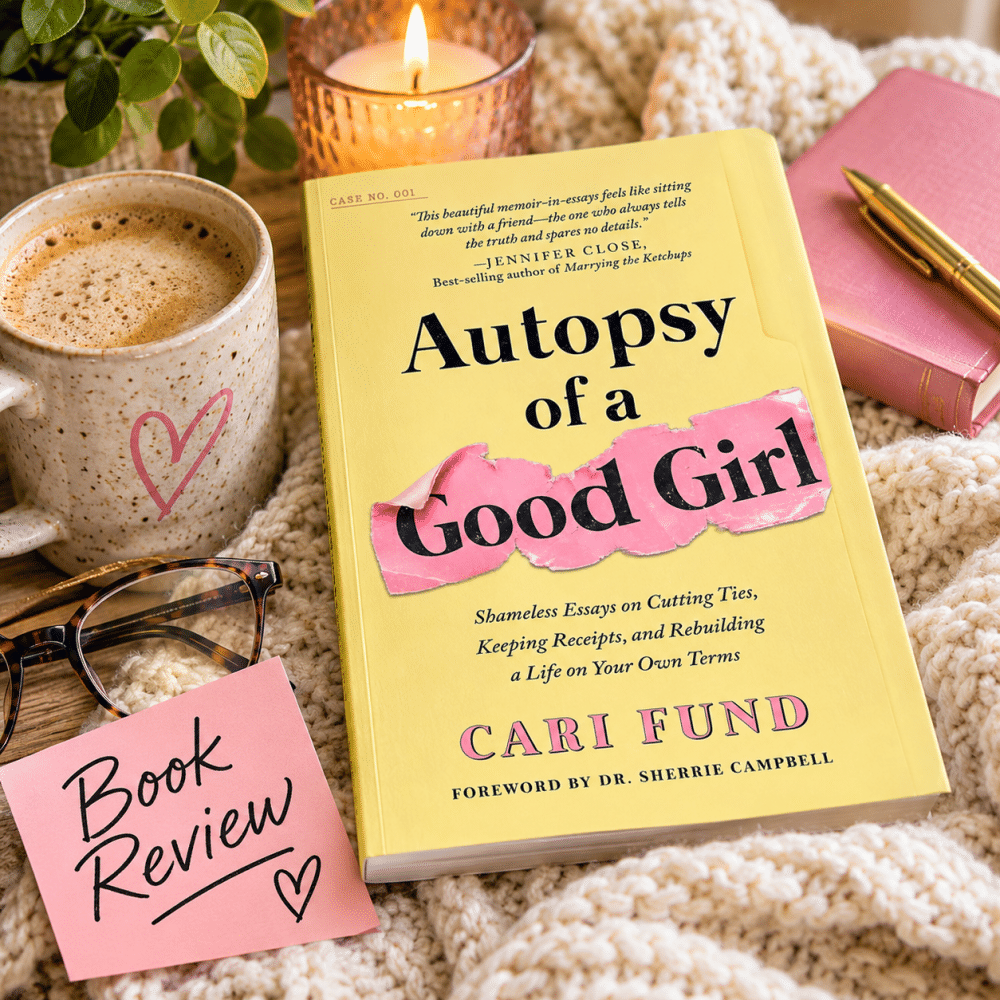
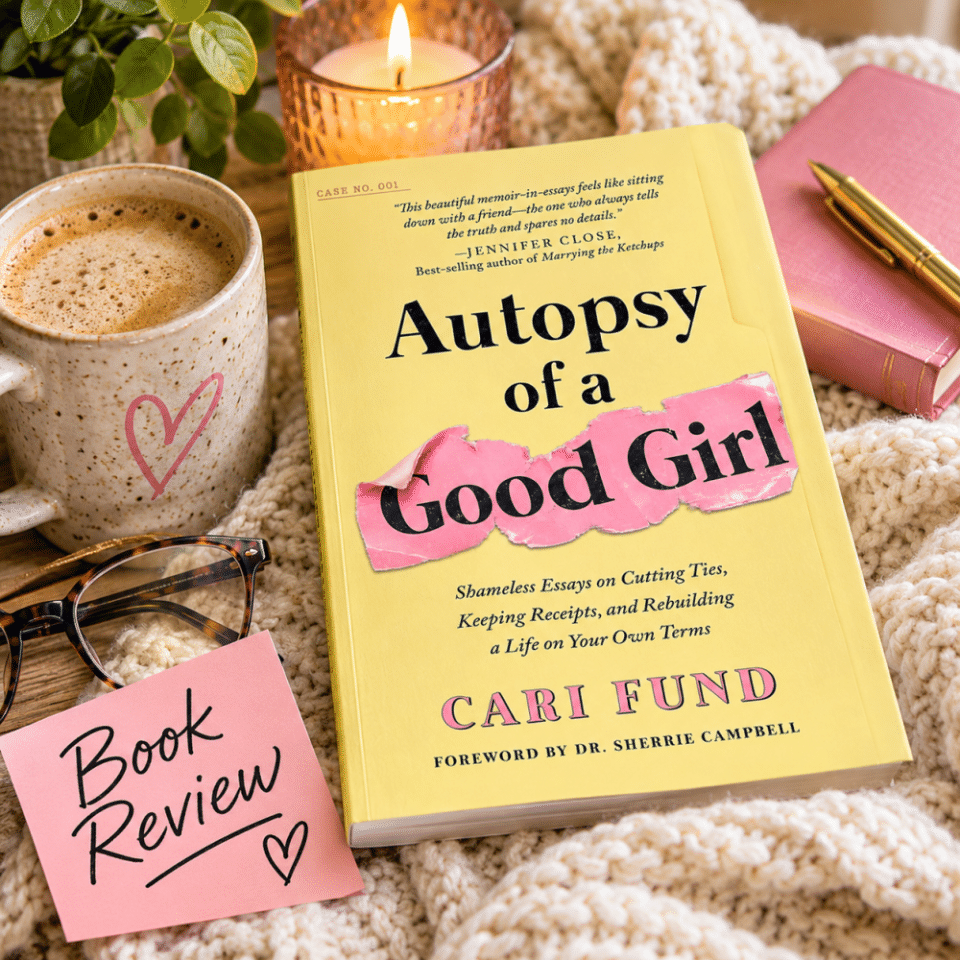
Autopsy of a Good Girl Book Review: When Keeping Up Appearances Matters More Than the Truth
Some books entertain you. Some books teach you something. And then there are books that reach into the deepest parts of your heart, pull out feelings you’ve spent years trying to explain, and finally give them words.
Autopsy of a Good Girl was that book for me.
I don’t think I have ever underlined more sentences in a book in my entire life. Seriously. At some point, I wondered if I should just underline the whole darn thing because page after page, I found myself thinking, Yes! This! This is exactly what I’ve been trying to say for years.
And maybe that’s what makes a book so powerful. Sometimes, you don’t even realize how badly you need someone to put your experiences into words until they do.
When Appearances Are Everything
One of the things that struck me most about Autopsy of a Good Girl was the emphasis on appearances.
Because in the family dynamics I recognized in this book, appearances were everything. And you know what? They were in my family, too. It didn’t necessarily matter what was happening behind closed doors as long as everything looked picture-perfect to the outside world.
Smile for the pictures. Don’t air the family’s dirty laundry. Don’t talk about things that might make someone uncomfortable. And whatever you do, don’t let anyone think our family is anything less than wonderful. But here’s the thing about keeping up appearances: Eventually, someone pays the price for maintaining that illusion. And more often than not, it’s the person who is hurting the most.
The person who is expected to swallow their feelings, overlook the hurt, and pretend everything is fine because acknowledging the truth might ruin the image everyone has worked so hard to create. I know that feeling all too well.
The Moment You Speak Up, You Become the Problem
This was probably the part of the book that resonated with me the most.
Because isn’t it funny how families can ignore years of hurtful behavior, unhealthy patterns, and emotional pain, but the minute someone finally finds the courage to speak up about it, suddenly THAT person becomes the problem?
Not the behavior. Not the hurt. Not the years of silence. The person who dared to say, “This isn’t okay.”
Suddenly, you’re difficult. You’re dramatic. You’re too sensitive. You’re causing problems. You’re tearing the family apart. But what if you weren’t tearing anything apart?
What if you were simply refusing to keep holding together something that was already broken?
That is the question I kept coming back to while reading this book. For so many of us, especially women who grew up believing that being a “good girl” meant being agreeable, respectful, accommodating, and quiet, speaking up can feel like an act of rebellion. We were taught to keep the peace. But nobody ever stopped to ask whether keeping that peace was costing us our own.
Being a Good Girl Shouldn’t Mean Losing Yourself
I think one of the hardest things to unlearn as an adult is the idea that being good means making everyone else comfortable, even when you’re uncomfortable yourself.
Being good doesn’t mean you have to accept being mistreated. Being respectful doesn’t mean you have to remain silent. Being loving doesn’t mean you have to pretend something didn’t hurt. And being part of a family doesn’t mean you have to sacrifice your emotional well-being to protect the family’s reputation. I spent so much of my life trying to understand why speaking honestly about my experiences sometimes felt like a betrayal. But here’s what I’ve come to realize:
Telling the truth about what happened to you is not the same thing as trying to hurt the people involved.
There is a difference between being cruel and being honest. There is a difference between holding a grudge and acknowledging a wound. And there is absolutely a difference between destroying a family and refusing to participate in the silence that allows unhealthy patterns to continue.
The Refreshing Freedom of Finally Saying It Out Loud
What made Autopsy of a Good Girl so refreshing for me wasn’t simply that I related to it. It was that the book gave voice to things so many of us have suffered through in silence. Things we’ve whispered to trusted friends. Things we’ve questioned ourselves about. Things we’ve replayed in our minds, wondering if maybe we were the ones who got it wrong. And sometimes, things we’ve been afraid to say out loud because we know exactly how the people involved might react.
There is something incredibly validating about reading words that reflect experiences you’ve spent years trying to make sense of. It’s like someone finally turns on the light in a room you’ve been stumbling around in for decades. And suddenly, you realize you weren’t imagining the furniture. It was there all along.
I think that’s why I underlined so much of this book. Every underline felt like a little moment of recognition. A reminder that I wasn’t alone in feeling the way I did. And sometimes, that recognition is the beginning of healing.
Choosing Authenticity Over Appearances
As I’ve gotten older, I’ve realized something important. I don’t want a picture-perfect life. I want a real one. I don’t want relationships where everyone smiles for the camera but nobody can have an honest conversation. I want relationships where people can disagree, make mistakes, apologize, grow, and still love one another. I want a family where love isn’t measured by how well we protect an image but by how safely we can show up as our authentic selves. And I want the people I love to know that they never have to pretend everything is okay just to make me comfortable.
Because I’ve lived long enough to understand that appearances can be deceiving. A beautiful family photograph doesn’t tell you what happened before the camera clicked. A holiday gathering filled with smiles doesn’t reveal the conversations people were afraid to have. And a family that looks perfect from the outside isn’t necessarily a family where everyone feels heard, valued, or loved.
I’d rather have an imperfect family that tells the truth than a picture-perfect one built on silence.
My Final Thoughts on Autopsy of a Good Girl
I went into this book expecting to read someone else’s words. I didn’t expect to find so many of my own feelings staring back at me. I didn’t expect to underline what felt like every other paragraph. And I certainly didn’t expect to feel such a sense of relief when I finished. But that’s exactly what happened.
Autopsy of a Good Girl reminded me that there are so many people walking around carrying stories they’ve never felt safe enough to tell. People who were taught that loyalty meant silence. People who were made to feel guilty for setting boundaries. People who were labeled the problem simply because they stopped pretending there wasn’t one. And people who are still learning that their voices matter, even when their truth makes someone else uncomfortable. If you’ve ever felt like the black sheep of your family simply because you refused to ignore what was happening behind closed doors, this book may resonate with you, too.
If you’ve ever been told you were too sensitive when you were simply asking to be treated with kindness, I hope you know your feelings deserve to be acknowledged. And if you’ve ever been made to feel like the villain in someone else’s story because you finally started telling your own, I hope you find the courage to keep speaking.
Because here’s what I believe now more than ever:
You can love your family and still acknowledge the ways they hurt you.
You can forgive someone without pretending the past never happened.
And you can be a good girl without being a silent one.
Maybe that’s the greatest lesson I took away from this book. I don’t have to keep up appearances anymore. I can simply be real. And after years of believing that being a good girl meant keeping everyone else happy, that kind of freedom is priceless.
My recommendation: Read this book with a pen or highlighter nearby. If your experiences are anything like mine, you’re going to need it.
Have you ever read a book that made you feel like someone had finally put your life experiences into words? Or have you ever felt like speaking up about family dynamics made you the problem? I’d love to hear your thoughts in the comments. Because sometimes the most powerful thing we can do is remind each other that we’re not alone.
And remember, your story matters, your voice matters, and you deserve to be heard.

You May Also Like

You Heard It Here First Book Review
Candy And The Cankersaur